
I am happy to report that my electronic health record vendor (Baritrax360) updated their app. With one click, I can now pull up my patients’ weight loss data for different operations out to ten years. (Before the change, the report function only gave you five years’ worth of data, which, in my view, is too short an interval to be interesting.)
Here’s our ten-year data (drumroll ensues):
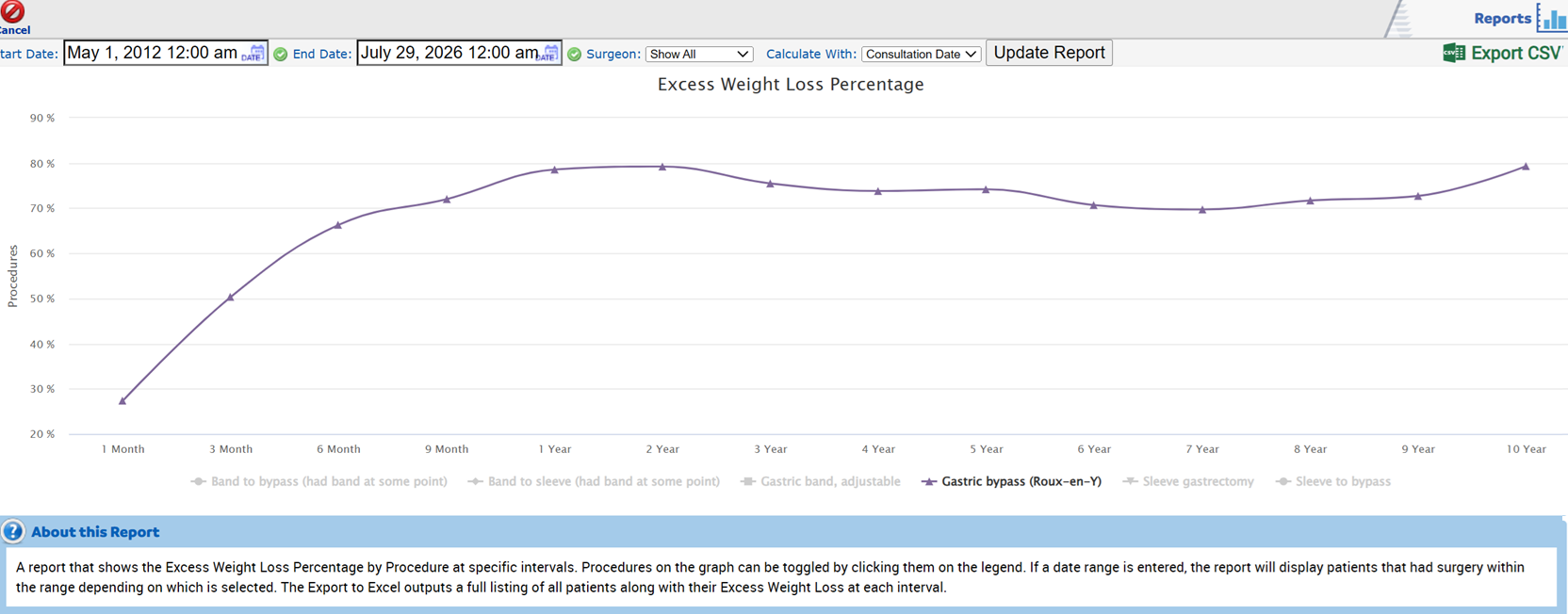
Gastric bypass at ten years
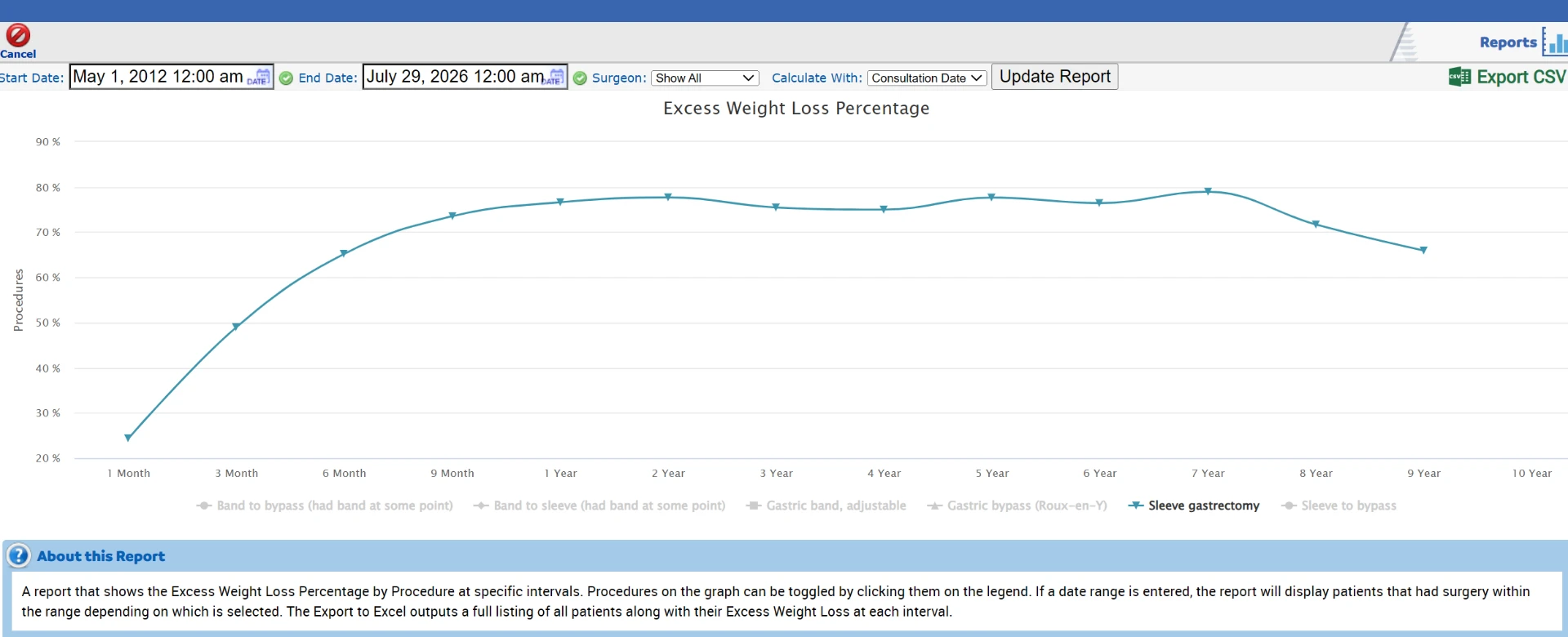
Sleeve gastrectomy at ten years
Overall, I am more than satisfied with how we have been doing. With gastric bypass surgery, we are above the 70% average at most points in time, only dipping a hair beneath it at seven and eight years out. (I have not yet figured out why.) Still, it’s very solid.
Our sleeve data is remarkable. Nationwide, average weight loss for sleeve gastrectomy is 60%. At our practice, average sleeve weight loss is greater than 70% every year except the nine-year mark, where it is 65.17%. The reason for that dip is that at this point, our nine-year data sleeve data consists of one person only. I expect it to revert to the shape of the rest of the curve as more patients complete their nine-year follow ups. (Hey guys, where are you?)
Why durability matters
One of the reasons I posted this data is that various online sources cast doubt on the durability of weight loss achieved through surgery.[i] It is true that most bariatric surgery patients experience a few pounds of weight regain between years three through five, but it is also true that the dip is normally followed by long-term stability. Our data reflects that fact.
[i] Most commonly, I see it coming from marketers of non-surgical weight loss products.